
|
TNS Advocacy • Mobile Stroke Units (MSUs) Expanding Access to Critical Stroke Care Mobile Stroke Units in Rural TexasWhen a patient experiences a stroke, every minute of delayed treatment kills millions of additional brain cells. For many rural Texans, these costly delays can lead to irreversible brain damage or even death. Now Open • HHSC Grant Solicitation HHS0017579 – CRS Mobile Stroke Unit Applications are due Monday, September 28, 2026, by 10:30 a.m. Central Time. Why Mobile Stroke Units MatterMobile Stroke Units (MSUs) can dramatically improve access to stroke care in rural Texas, where patients often live many miles from a designated stroke treatment center. By treating stroke patients on-site, MSUs can extend the reach of these stroke treatment centers to ensure that rural Texans are able to receive critical intervention within the first hour of a stroke. By expanding the availability of MSU care in rural and underserved communities, Texas can significantly reduce stroke-related death and disability, enhance survival rates, and improve recovery outcomes. The MSU Advantage 1
On-site treatment MSUs treat stroke patients where they are, before they ever reach the hospital. 2
Extended reach MSUs extend the reach of designated stroke centers to rural patients who live many miles away. 3
Better outcomes Wider MSU access can reduce stroke-related death and disability and improve recovery. 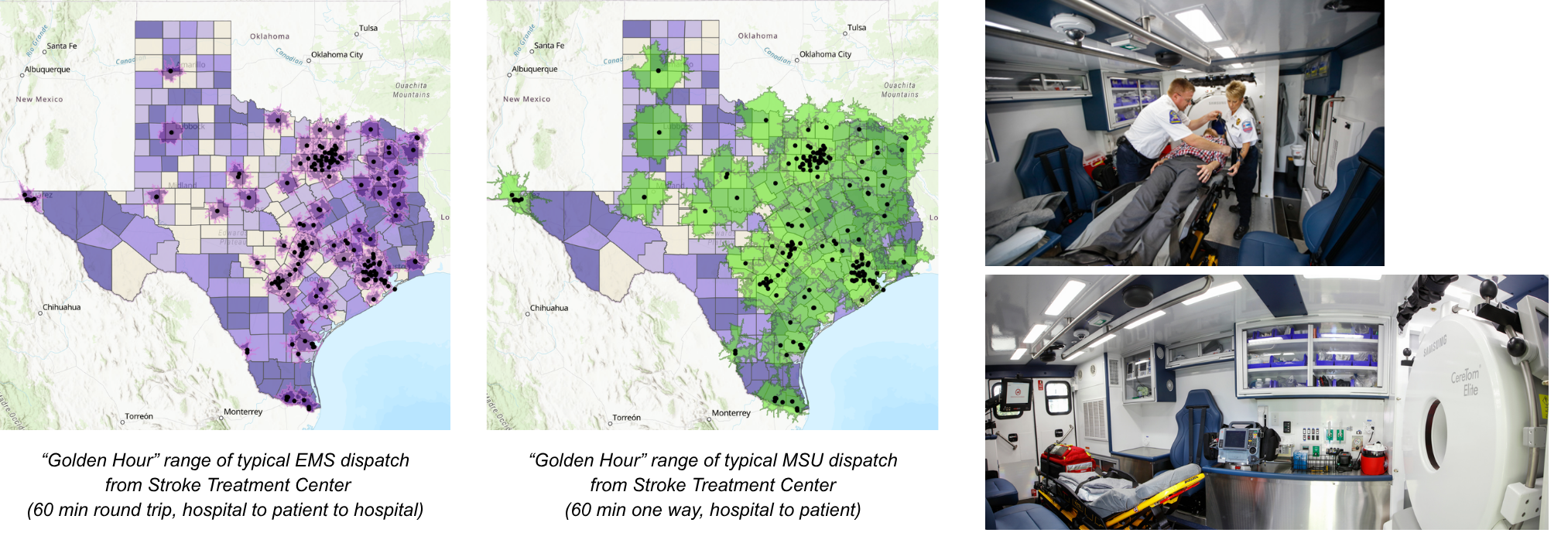 Explore MSU ResourcesVideos Watch TNS’s podcast conversation with stroke pioneer Dr. James Grotta and “Mobile Stroke Units: A Texas Solution.” Articles Read news and research on MSU outcomes, including Neurology Today coverage of how MSUs compare with standard EMS care. HHSC Application Due Sept 28HHSC grant solicitation HHS0017579 is open. Find key dates, application documents, and TNS materials to build your proposal. About the Texas Neurological Society The Texas Neurological Society is a physician-led organization dedicated to advancing the field of neurology in Texas through education, advocacy, and the promotion of high-quality neurological care. Representing neurologists, neurosurgeons, and healthcare professionals across the state, TNS works to improve patient outcomes by supporting clinical research, providing continuing medical education, and advocating for policies that improve access to neurological care. With a focus on collaboration and innovation, the society works to address the unique healthcare challenges facing Texas’ diverse population, particularly in areas of stroke care, epilepsy, multiple sclerosis, and other neurological disorders. |
Upcoming Events
Thu Nov 12, 2026AUVELITY for Agitation Associated with Alzheimer's Dementia Category: Harris County Neurological Society |
View Full Calendar
Thank You Sponsors
